


Trump Accused of Plagiarizing Open Source Software
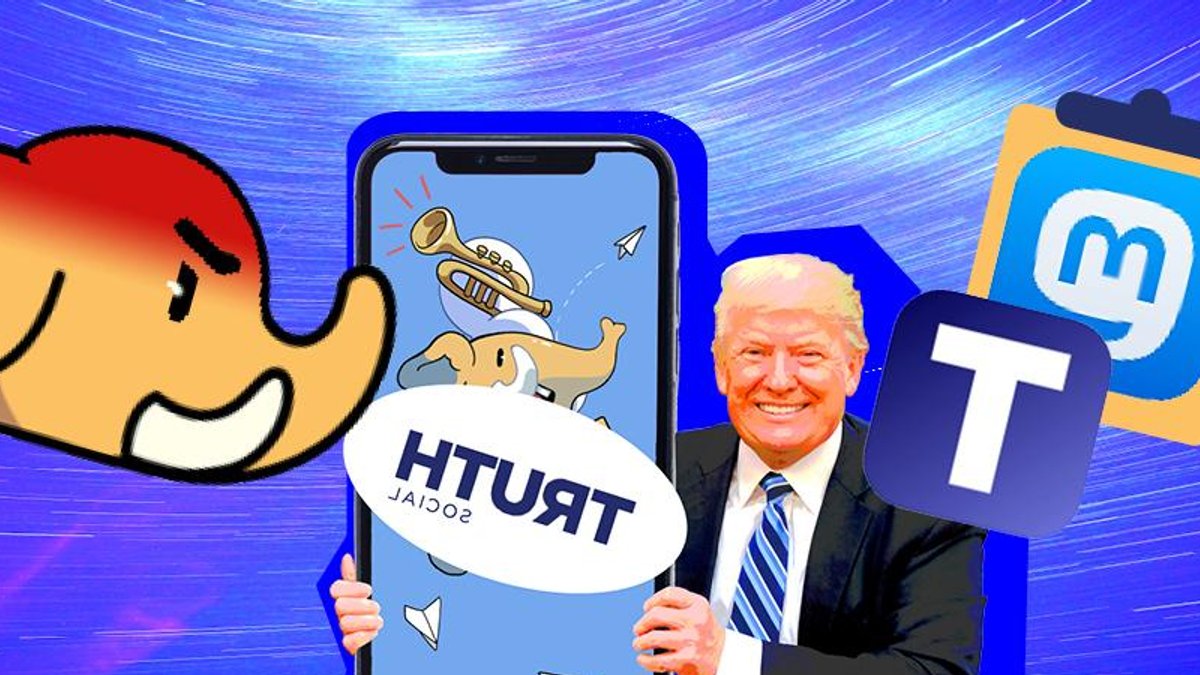
Donald Trump’s new social media network, Truth Social, is facing a potential lawsuit from Mastodon, a decentralized, open-source social media software provider. Mastodon claims that Truth Social is trying to pass off its free product as a whole new app, and as its own proprietary technology.
Mastodon was founded in 2016 by German coder Eugen Rochko, and it’s among a wave of social media projects that have sprung up as alternatives to Twitter and Facebook. Mastodon’s main server prohibits “all content illegal in Germany,” which includes Nazi symbolism and Holocaust denial.
Mastodon isn’t really a social media platform, but rather a codebase that anyone can use to create their own social media network. It includes thousands of independent online websites and servers called “instances.” There is no Mastodon app, and users log onto their specific instance via compatible third-party apps.
Every user interface shows users both a “local” timeline of posts exclusively from their home instance, as well as a “federated” timeline that shows all the users they’re connected to across instances. This design allows for a high degree of customization and flexibility.
Mastodon’s code is published under the Free Software Foundation’s AGPLv3 license, which requires all users to make the source code and any modifications free and publicly accessible. This license is what’s at the heart of the dispute between Mastodon and Truth Social.
Leaked screenshots of Truth Social’s beta version show a nearly identical interface to Mastodon, suggesting that Truth Social is really just a Mastodon instance. Additionally, Truth Social’s metadata includes HTML references to Mastodon. However, Truth Social is claiming that all its source code is original and proprietary.
Rochko’s complaint is that Truth Social’s terms and services page doesn’t contain any reference to Mastodon, nor any links to the source code.
Related: Ethical Elegance: Why Lab-Grown Diamonds are Dazzling Londoners
Trump might have chosen to use Mastodon due to its decentralized design, which makes it difficult for moderators to shut down servers, even if they go against the platform’s ethos.
Right-wing communities have taken advantage of this feature in the past. For example, the self-described “free speech” platform Gab moved to a Mastodon forum after being banned from the Apple and Google Play stores. While Gab goes against Mastodon’s values, the platform’s open-source code allowed it to implement the software without permission.
Mastodon is taking a firm stance on enforcing its license and protecting its intellectual property. The outcome of this dispute could have significant implications for the future of open-source software and social media platforms.
The dispute between Mastodon and Truth Social highlights the complexities of open-source software and the need for clear licensing and attribution.
The situation is a reminder that even in the world of social media and technology, issues of licensing and attribution can have significant consequences.
As the use of open-source software continues to grow, it’s essential to understand the implications of these licenses and how they can impact the development of new platforms and technologies, similar to how strategic placement of services can attract new customers.

Ethical Elegance: Why Lab-Grown Diamonds are Dazzling Londoners


