


Europe struggles to quit Russian gas
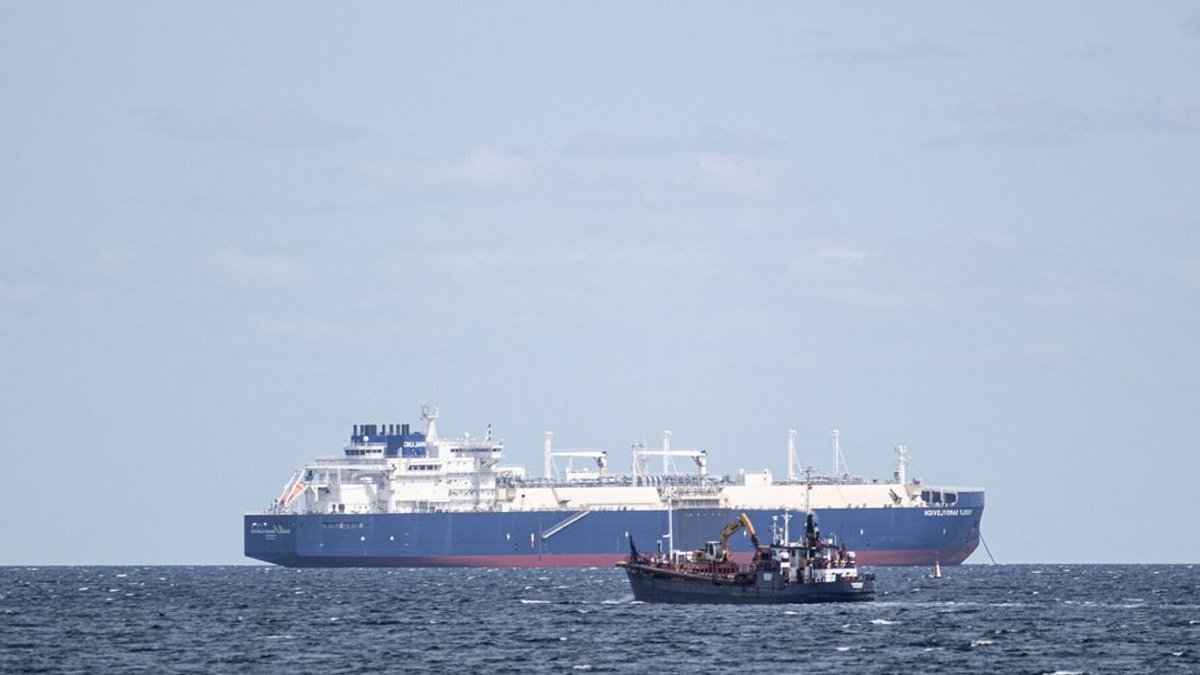
Europe is importing Russian liquefied natural gas at record levels even as it prepares a total ban on the fuel in 2027, with no clear impact on Moscow’s revenue.
From March 18 to May 31 of 2026, Russian LNG imports into Europe increased by 17% compared to the same period in 2025, according to data from the EU’s Agency for the Cooperation of Energy Regulators. In May alone, 23 of the 25 cargoes exported from the Yamal LNG project—one of Russia’s largest Arctic gas developments—arrived in the EU. The rise occurred even after an April ban on new short-term contracts intended to limit the flow.
Long-term contracts keep the gas flowing
The EU’s ban on Russian LNG won’t take full effect until January 1, 2027. Until then, existing long-term contracts remain valid, and European companies are accelerating deliveries before the cutoff. Major buyers include TotalEnergies in France, Naturgy in Spain, Sefe in Germany, and Fluxys in Belgium.
Sebastian Rötters, a sanctions campaigner with Urgewald, stated that shipments to Europe have grown significantly. He noted that nearly all Yamal cargoes are reaching the EU, with member states stockpiling as much Russian gas as possible before the 2027 deadline.
Related: Europe Strengthens Water Management Systems
The fuel accounted for 13% of Europe’s total LNG imports in the first quarter of 2026. Critics argue the EU’s sanctions aren’t weakening the Kremlin’s war funding but instead allowing European firms to benefit while keeping Russia’s energy exports alive.
The trend highlights Europe’s struggle to break free from volatile global energy markets. The closure of the Strait of Hormuz earlier this year, following conflict involving the U.S. and Israel, disrupted supplies from Qatar, a key European supplier. With Middle Eastern gas under pressure and Asian buyers competing for the same cargoes, importers have turned back to Russia.
Anne-Sophie Corbeau, a researcher at Columbia University’s Center on Global Energy Policy, said energy security often outweighs political concerns when supply is tight. Reliability, in such cases, takes priority.
The Danish shipyard maintaining Russia’s Arctic fleet
Europe isn’t only purchasing Russian LNG—it’s also enabling the trade to continue. A fleet of 15 specialized icebreaking tankers, called Arc7s, plays a key role in the Yamal project. Equipped with European technology, these ships can operate through thick Arctic ice throughout the year, transporting up to 1.5 million metric tons of LNG annually. Urgewald estimates each vessel carries cargo worth €600 million to €800 million per year.
Related: Comcast splits with suitors waiting
Most of these tankers are owned by European firms and serviced in European shipyards. Danish Fayard remains the only EU shipyard still servicing the specialized icebreaking tankers that carry the fuel from Russia’s Arctic to European ports.
Rötters suggested Fayard appears to be profiting from the situation.
The contradiction has drawn attention in Denmark, a strong supporter of Ukraine. Danish Prime Minister Mette Frederiksen called Fayard’s continued work “completely incomprehensible.” Martin Lidegaard, Denmark’s minister of business and competitiveness, said authorities are monitoring the situation but acknowledged that companies can still choose whether to comply with the law.
An energy transition stalled
The EU’s 2027 ban on Russian LNG was meant to end Europe’s reliance on Moscow’s fossil fuels. With the deadline approaching, some leaders are already pushing for delays. The Strait of Hormuz crisis revealed how fragile Europe’s energy security remains, and the search for alternatives has exposed the lack of a long-term plan.
Related: Stablecoins reshape global finance silently
Every energy shock—whether from Russia’s invasion of Ukraine or the Hormuz blockade—leads Europe to rely on short-term fixes. Renewable energy and electrification have been proposed as solutions, but progress varies. Spain has advanced, while Poland continues investing in fossil fuel infrastructure instead of renewables.
Corbeau explained that Europe typically seeks new supply sources before considering demand reduction. Cutting consumption could help, but the focus remains on securing alternative sources. Norway’s gas fields and potential developments in Romania are seen as ways to reduce dependence on both Russia and the U.S., which has become Europe’s main LNG supplier.
Ana Maria Jaller-Makarewicz, lead energy analyst at the Institute for Energy Economics and Financial Analysis, said Europe must prepare better for a future without Russian energy. Decisions should focus on long-term solutions rather than temporary measures.
The challenge is whether Europe will act before the next crisis or continue relying on familiar strategies.

Europe Strengthens Water Management Systems


