


Asean states sign digital economy agreement
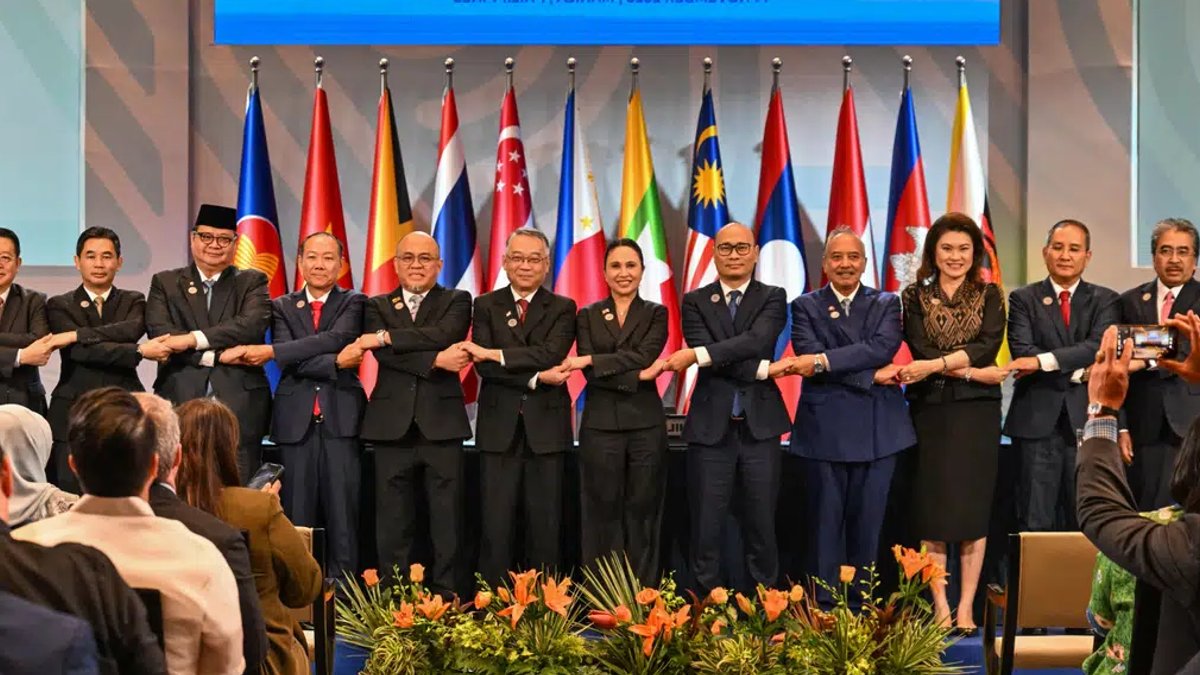
Asean member states have signed the Digital Economy Framework Agreement (Defa), a landmark digital economy agreement, in Manila on November 14. According to Singapore Deputy Prime Minister Gan Kim Yong, the agreement will come into force in early 2027 and will benefit businesses and consumers in the region.
Prior to the signing, negotiations began in September 2023. Gan Kim Yong stated that priority projects under the pact could include digital payment systems, digital identities for businesses, and electronic trade documentation, which would make cross-border transactions faster, easier, and less costly.
Digital Economy Agreement Details
The Defa agreement establishes common rules covering digital trade, cross-border data flows, electronic payments, cybersecurity, and artificial intelligence. It will replace the Asean Electronic Commerce Agreement of 2019 and is expected to enter into force 180 days after the signing.
Gan Kim Yong elaborated on the benefits of Defa, saying electronic trade documentation could help companies reduce paperwork, speed up transactions, and lower administrative costs. The agreement could also make digital payments more seamless, both for consumers making purchases across borders and companies conducting business-to-business transactions.
Additionally, digital identities would help businesses verify whom they are trading with, while clearer rules on cross-border data transfers could make it easier for companies to expand into other Asean markets. The agreement also strengthens cooperation on data protection, cybersecurity, and combating online scams.
Read Also: Malaysia denies clearance and investigates AI chip re-exports
Implementation and Challenges
Implementing Defa is expected to be challenging due to the varying levels of digital infrastructure, regulations, and business readiness among Asean countries. To address these differences, the agreement allows countries that are ready to move ahead with specific initiatives while leaving the door open for others to join later.
Gan Kim Yong acknowledged that this flexibility would enable Asean to progress at its own pace, rather than being held back by the slowest member. He also noted that officials were working on implementation plans to ensure businesses could benefit from the agreement early, and that governments would need to engage the private sector and invest in skills training to ensure businesses and workers were digitally ready.
For instance, countries prepared to facilitate cross-border data flows in particular sectors could work together, subject to safeguards relating to privacy, business confidentiality, and national security. This approach would allow Asean countries to make progress on digital integration while addressing the unique challenges and concerns of each member state.
The Asean digital economy is projected to reach $368 billion in 2026 and exceed $1 trillion by 2035, according to a report by Google, Temasek, and Bain & Company. As the region continues to grow and integrate, the Defa agreement is expected to play a significant role in shaping the digital economy and facilitating trade and investment among Asean member states.
With the Defa agreement in place, Asean countries can focus on implementing the necessary initiatives and projects to support the growth of the digital economy. As Gan Kim Yong noted, the key to success will be the effective implementation of the agreement and the ability of businesses to benefit from it in practice.
Read Also: HSBC Plans Singapore Consolidation to Reduce China Dependence
As Asean chair in 2027, Singapore hopes to advance work on a proposed Asean Green Economy Framework Agreement, which aims to identify areas for cooperation on sustainability and green economic activities. The grouping is also working to bring its upgraded Asean Trade in Goods Agreement into force by the end of 2026, earlier than initially planned.
According to Gan Kim Yong, the agreement will enter into force 180 days after the signing, which is expected to be in early 2027. This timeline will give Asean countries sufficient time to prepare for the implementation of the agreement and to ensure that businesses and consumers can benefit from it as soon as possible.
Singapore businesses have welcomed the Defa agreement, but they emphasized that its success depends on effective implementation. Kok Ping Soon, chief executive of the Singapore Business Federation, noted that companies want to see tangible benefits, such as less paperwork at borders and more seamless digital payments.
He also stressed the importance of trusted data flows, which would make it easier for companies to operate across Asean.
Regional Cooperation and Growth
The Asean foreign ministers also discussed transboundary haze pollution and efforts by Indonesia to tackle land and forest fires that have affected neighboring countries. Singapore has pledged to prioritize work on the establishment of the Asean Coordinating Centre for Transboundary Haze Pollution Control in Indonesia as Asean chair in 2027.


