


Corporate hybrids lose their allure
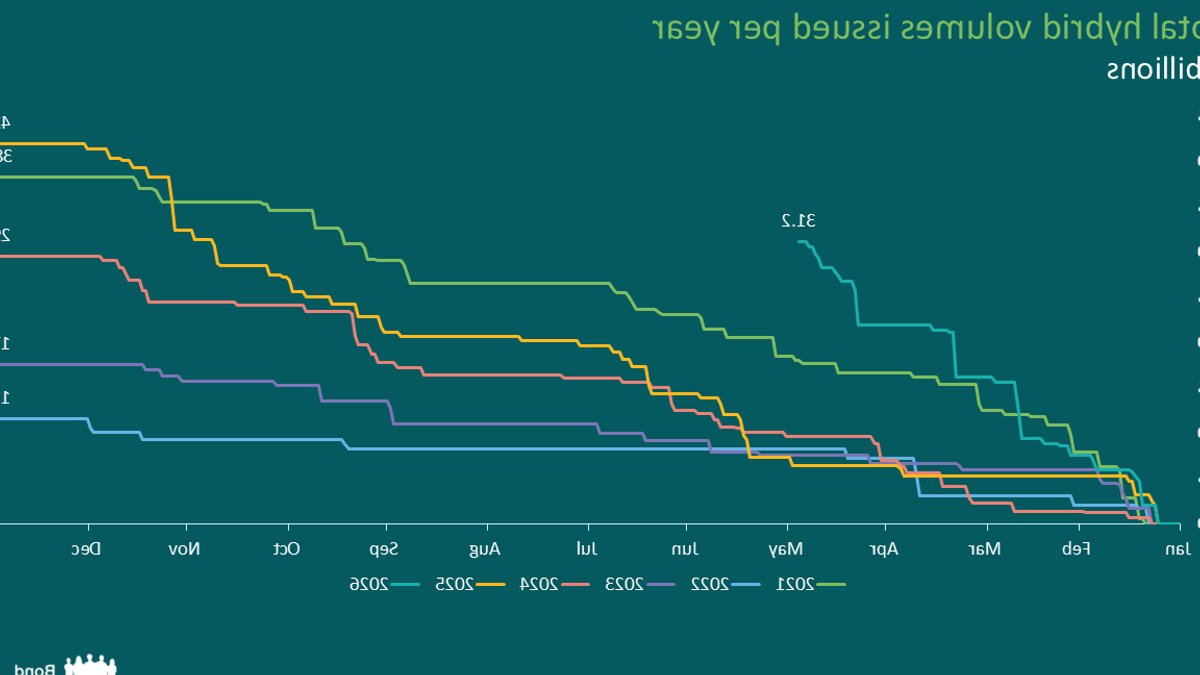
The corporate hybrid market has kicked off 2026 with strong demand, with year-to-date gross issuance already surpassing €31bn, well ahead of prior run-rates. According to the report, this is largely driven by investors seeking carry and beta in a world with compressed valuations.
Hybrids are perpetual bonds that combine features of both debt and equity, subordinated to senior bonds but ranking ahead of equity, with equity-like features such as loss-absorption and the ability to defer coupons.
In the past week alone, over €3bn of supply has been issued, with order books typically six times covered, and pricing tightening by 50bp from initial guidance, a clear signal of demand overwhelming supply.
Five-year call structures have emerged as the market’s sweet spot, with coupons in the high-4% to 6% range satisfying the carry argument, and investors confident that issuers will call their hybrids at the first opportunity.
Grand City Properties’ recent issuance demonstrates this confidence, as the market has long-debated the motivations of issuers to call these low-reset hybrids, particularly in a higher all-in-yield environment.
From an investor’s perspective, short-dated calls (three to five years) are the most attractive, offering good rolldown yield, even in markets that trade sideways or in a modest move wider.
Related: Crypto Faces Mounting Regulatory Pressure
However, longer-calls present a different type of market beta and face greater risk of capital losses if the market does start to question whether the risks warrant greater scrutiny.
The investment-grade investor base dramatically outsizes the high-yield one, resulting in vastly better liquidity in hybrids compared to high-yield bonds, which is a key factor for investors considering European utilities investments.
From an issuer’s perspective, hybrids have become a core balance-sheet tool, across both Europe and the US, with the outstanding stock of hybrid debt steadily growing to around €200bn today.
For now, hybrids continue to offer some investors the solutions they are looking for in a world of compressed valuations.
Investors are willing to fund issuer balance-sheet optimisation on what looks like a tactical basis, comforted by strong demand and low volatility.

European Utilities Face Huge Spending Bill


