


Many oil exporters lag behind expected gains
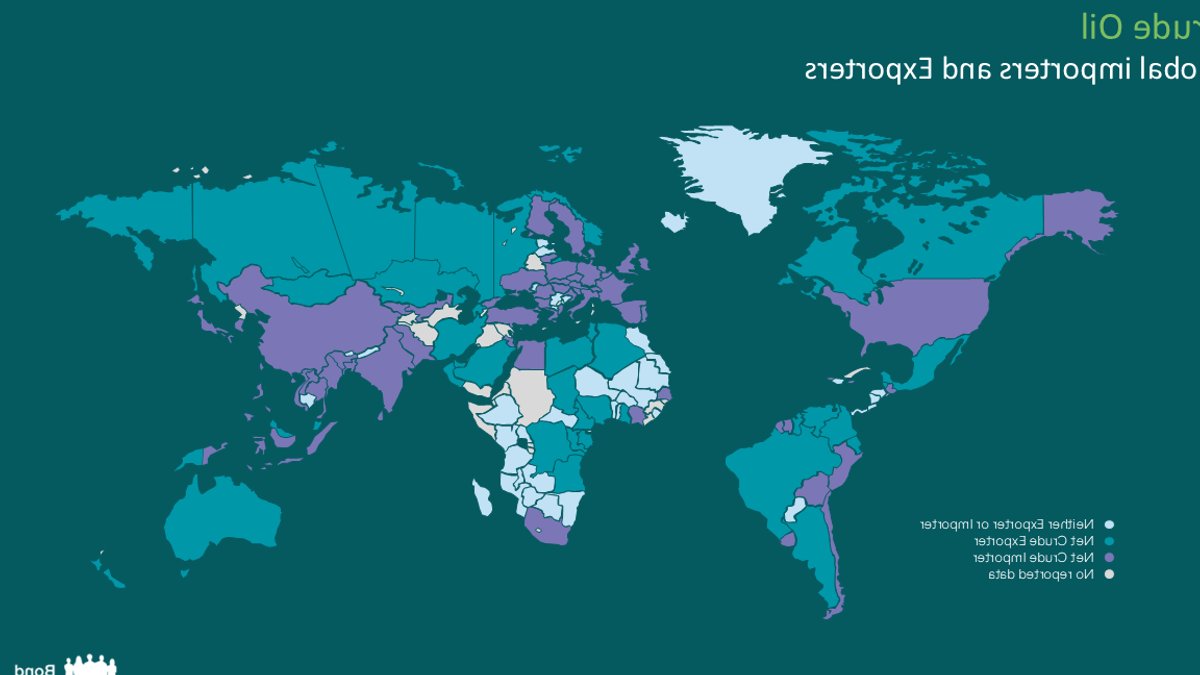
Oil‑exporting countries are not automatically the biggest winners as oil prices hover around $100 a barrel, a situation that has forced bond investors to re‑evaluate inflation, monetary policy and trade balances worldwide.
Crude exports versus refined product imports
The World Bank’s latest data separates nations that export crude oil from those that import it, and adds a second layer that shows the flow of refined products such as gasoline and diesel. The charts reveal that many economies in Asia and Europe remain net importers of both crude and refined fuels, leaving them exposed to higher price pressures.
Mexico, for example, ranks among the largest crude exporters but still imports more refined products than it exports. Ecuador faces a similar situation, with diesel imports eroding the benefit of its crude exports.
In contrast, the United States runs a modest crude import bill but ships a substantial surplus of refined products abroad. This structure means widening crack spreads – the margin between refined product prices and crude – tend to boost U.S. trade balances while deepening deficits for nations with limited refining capacity.
Who truly benefits from higher prices?
Countries that control the entire value chain, from extraction to refining and export of finished fuels, stand to gain the most.
Other regions, such as Latin America, the Middle East and parts of Africa, contain a mix of net crude exporters and balanced trade profiles. While many of these nations have seen sovereign bonds strengthen since the start of the Iran conflict, the advantage varies widely depending on domestic refining capability.
Related: AI drives high-yield investment shift
Some Asian central banks, including those of Indonesia and the Philippines, have already raised rates in response to rising oil costs. Their economies possess solid credit buffers, yet the fiscal impact of longstanding fuel subsidies could become more pronounced as higher prices persist.
European governments continue to extend temporary relief measures like VAT cuts, yet cash‑strained budgets may feel the strain longer term. The United States has opted to release oil reserves to increase supply rather than provide direct household subsidies.
Emerging markets outside Asia generally appear to be net beneficiaries, but net oil importers such as Egypt, Turkey and South Africa are confronting challenges similar to their Asian counterparts.
When crack spreads widen, the cost of importing refined fuels climbs faster than export revenues from crude, worsening trade balances for nations with weak refining sectors. This effect is most acute where transport fuel demand is rising sharply.
One way to view the situation is to compare it with the early 2010s, when a surge in crude prices also highlighted the importance of refining capacity. Back then, countries with limited domestic refineries struggled to convert higher export earnings into net gains, a pattern that repeats today.
Overall, the data suggest that being a crude exporter does not guarantee a win in a high‑oil‑price environment. Nations with integrated upstream and downstream operations, or those that are net exporters of refined products, are better positioned to profit from the current market conditions.

Bond yields fall as curve shifts downward


