


Emerging Markets Still Worth Investing In
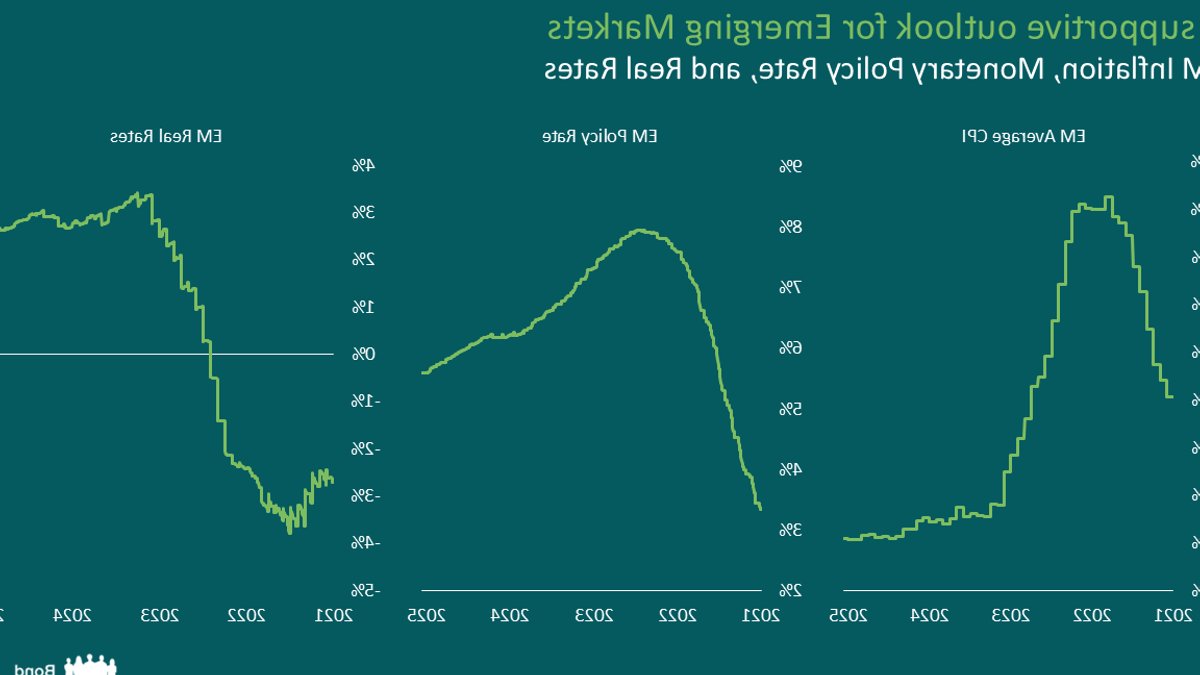
Investors are still showing interest in emerging market local debt, despite the 2025 rally. According to the report, two main factors support this trend: emerging markets offer compelling macroeconomic fundamentals, and there’s a rising interest in diversification from structurally long USD exposures.
Strong Monetary Policy Discipline
Emerging Market central banks have managed monetary policy well over the last year, avoiding excessive easing. As a result, EM real rates have remained stable and at attractive levels, around 2.5%.
Stability is expected to continue, with inflation remaining well contained through 2026, supported by stronger EM FX, subdued oil prices, and moderate GDP deceleration.
Tight Fiscal Anchor
Price action in emerging markets has been driven by fiscal factors. For example, Argentina’s sovereign bonds tripled in price since Milei took office, while Ecuador’s bond prices doubled after Noboa won the election.
In contrast, developed markets are facing scrutiny, with the US seeing its longest government shutdown in history. EM stands out, with a simple average debt-to-GDP ratio roughly half that of the US.
Over the past 20 years, EM debt has risen by 18 percentage points, compared to a 57-point increase in US debt.
Ownership and Returns
Despite the 2025 rally, international investor ownership of local-currency sovereign bonds remains low, averaging 15.4% of outstanding stock across 19 key EM countries.
19% returns in 2025 are attracting attention from non-EM investors, increasing the likelihood of inflows as global investors seek to capture momentum.
Local bonds delivered an exceptional return last year, with combined FX and rates performance per J.P. Morgan’s GBI-EM GD index, according to the IMF.
USD Weakness and EM Local Markets
The ongoing narrative of USD weakness should favor EM Local Markets, driven by US fiscal imbalances, widening deficits, and heavy US Treasury issuance.
This, combined with the Fed easing rates and risks around the Fed succession plan, should favor EMFX. The US midterms in November may add volatility to the US political situation.
Emerging markets are still offering value, given their unique combination of macroeconomic fundamentals and diversification benefits. This is similar to past situations where emerging markets have outperformed during periods of USD weakness.
Key risks to the bullish view include US policies towards EM and presidential or parliamentary elections in countries like Brazil, Costa Rica, and Colombia.
These risks can contribute to volatility in EM asset pricing, and investors should be aware of them when considering the emerging market situation.
Investors seeking to capture momentum in emerging markets may consider a credit roll-down strategy to optimize their bond portfolios.

Credit roll-down strategy gains traction


