
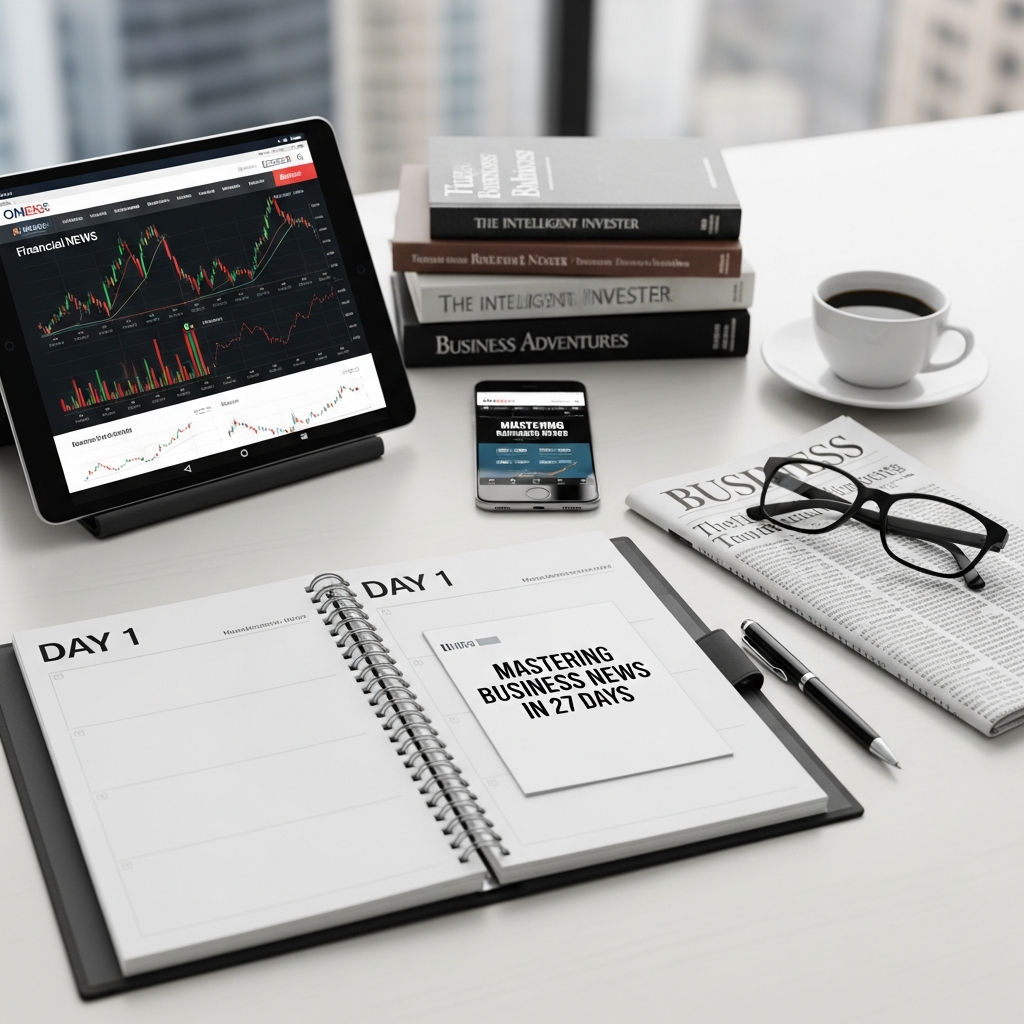
How to Master Business News in 27 Days: A Step-by-Step Guide
In today’s fast-paced global economy, information is the ultimate currency. Whether you are an aspiring entrepreneur, a seasoned investor, or a professional looking to climb the corporate ladder, the ability to interpret business news is a superpower. However, the sheer volume of data—from stock tickers and earnings reports to geopolitical shifts and central bank announcements—can be overwhelming.
The good news? You don’t need an MBA to understand the financial world. What you need is a structured system. This guide provides a 27-day roadmap designed to take you from a confused observer to a confident analyst of the business landscape.
Phase 1: Building Your Foundation (Days 1–7)
The first week is about cutting through the noise and building a vocabulary that allows you to understand the “language of money.”
- Day 1–2: Curate Your Sources. Stop relying on social media snippets. Subscribe to reputable outlets like the Wall Street Journal, Financial Times, or Bloomberg. Download their apps and sign up for one daily morning briefing (like Morning Brew or Reuters Daily) to get a high-level overview.
- Day 3–5: Master the Vocabulary. You cannot master business news if you don’t know the difference between “revenue” and “profit,” or “hawkish” and “dovish.” Spend these days researching 10 key terms a day. Focus on EBITDA, IPO, Fiscal Policy, Monetary Policy, and Bull/Bear markets.
- Day 6–7: Understand the Indices. Learn what the S&P 500, the Dow Jones Industrial Average, and the Nasdaq actually represent. Knowing why these numbers move is the first step in understanding market sentiment.
Phase 2: Decoding Market Mechanics (Days 8–14)
Once you have the vocabulary, you need to understand the engines that drive the headlines. Week two focuses on the “Why” behind the news.
Understanding Central Banks
The Federal Reserve (in the US) and other central banks are the most influential players in business news. Spend Days 8 and 9 learning how interest rates affect everything from your mortgage to a tech company’s valuation. When the Fed raises rates, borrowing becomes expensive, and growth often slows. When they cut rates, the market usually rallies. Mastering this concept is 50% of the battle.
Sector Deep Dives
On Days 10–12, focus on specific sectors. The economy isn’t a monolith; it’s a collection of industries like Tech, Healthcare, Energy, and Consumer Staples. Notice how news affecting one sector (like a rise in oil prices) can negatively impact another (like airline stocks). This is called “intermarket analysis.”
The Role of Economic Indicators
On Days 13 and 14, learn to track the “big three” indicators: GDP (Growth), CPI (Inflation), and Unemployment rates. These reports are released monthly or quarterly and act as the pulse of the nation’s economic health. When a news anchor says “Inflation cooled more than expected,” you should immediately know that this might lead to lower interest rates.
Phase 3: Reading Between the Lines (Days 15–21)
Now that you understand the basics, it’s time to move from passive consumption to active analysis. This week is about identifying patterns and sentiment.

- Day 15–17: Earnings Season Mastery. Public companies report their financial health every three months. Learn to read a basic earnings summary. Don’t just look at the profit; look at the “guidance.” A company can make billions, but if they say next year looks “challenging,” their stock price will likely drop.
- Day 18–19: The Impact of Geopolitics. Business doesn’t happen in a vacuum. Trade wars, elections, and international conflicts dictate supply chains. Analyze how a news event in Europe or Asia impacts domestic prices and corporate strategy.
- Day 20–21: Identifying “Narratives.” Markets are driven by stories. Sometimes the narrative is “AI is the future,” and sometimes it is “A recession is coming.” Learn to identify which narrative the media is currently pushing and look for data that either supports or contradicts it.
Phase 4: Developing a Predictive Mindset (Days 22–27)
In the final stretch, you will transition from understanding what *is* happening to predicting what *might* happen next. This is the hallmark of a true business news master.
Synthesizing Information
On Days 22 and 23, practice connecting unrelated dots. If a major shipping route is blocked, which companies will see their costs rise? If a new technology is regulated, which competitors stand to gain? This level of “second-order thinking” separates the amateurs from the experts.
Developing Your Own Thesis
On Days 24 and 25, choose a specific company or trend and write a 200-word summary of your outlook on it based on recent news. Are you “bullish” (optimistic) or “bearish” (pessimistic)? By forcing yourself to take a stance, you engage more deeply with the information.
Efficiency and Maintenance
On Days 26 and 27, refine your routine. You can’t read everything. Learn the art of the “skim.” Read the headline, the first three paragraphs, and the concluding summary. Use tools like newsletters and podcasts (e.g., The Journal or FT News Briefing) to stay updated during your commute. Mastery is about consistency, not intensity.
Top Tips for Sustaining Your Business Intelligence
Reaching Day 27 is a massive achievement, but the business world never stops evolving. To maintain your edge, consider these long-term habits:
- Follow the Money: If you are confused by a news story, ask yourself: Who stands to profit from this? This simple question often clarifies complex political or corporate maneuvers.
- Diversify Your Viewpoint: Don’t just read sources that agree with your financial outlook. If you are optimistic about the economy, read a “bearish” analyst to understand the potential risks.
- Use Financial Calendars: Keep track of when major economic reports (like the Jobs Report) are due. This prevents you from being caught off guard by market volatility.
- Watch the Bond Market: While the Stock Market gets all the headlines, the Bond Market is often referred to as the “smart money.” When bond yields move significantly, it’s usually a precursor to a larger economic shift.
Conclusion: The Competitive Advantage of Knowledge
Mastering business news in 27 days isn’t about memorizing every ticker symbol on Wall Street. It is about building a framework that allows you to filter out the noise and focus on the signals that matter. By following this structured path—from learning the vocabulary to developing a predictive mindset—you equip yourself with the tools to make better career decisions, smarter investments, and more informed political choices.
The economy is a living, breathing entity. It changes every day, and now, you have the skills to change right along with it. Start your Day 1 today; in less than a month, the world of business will finally make sense.
